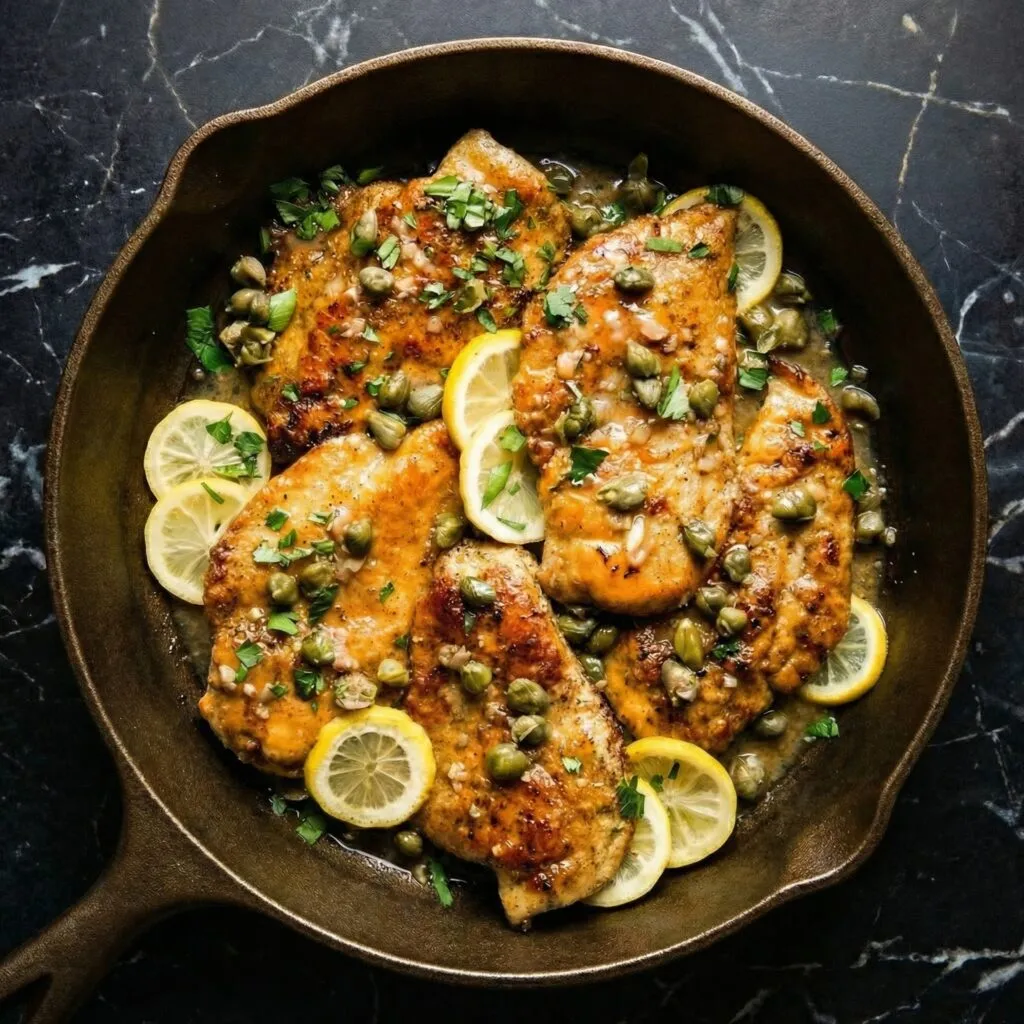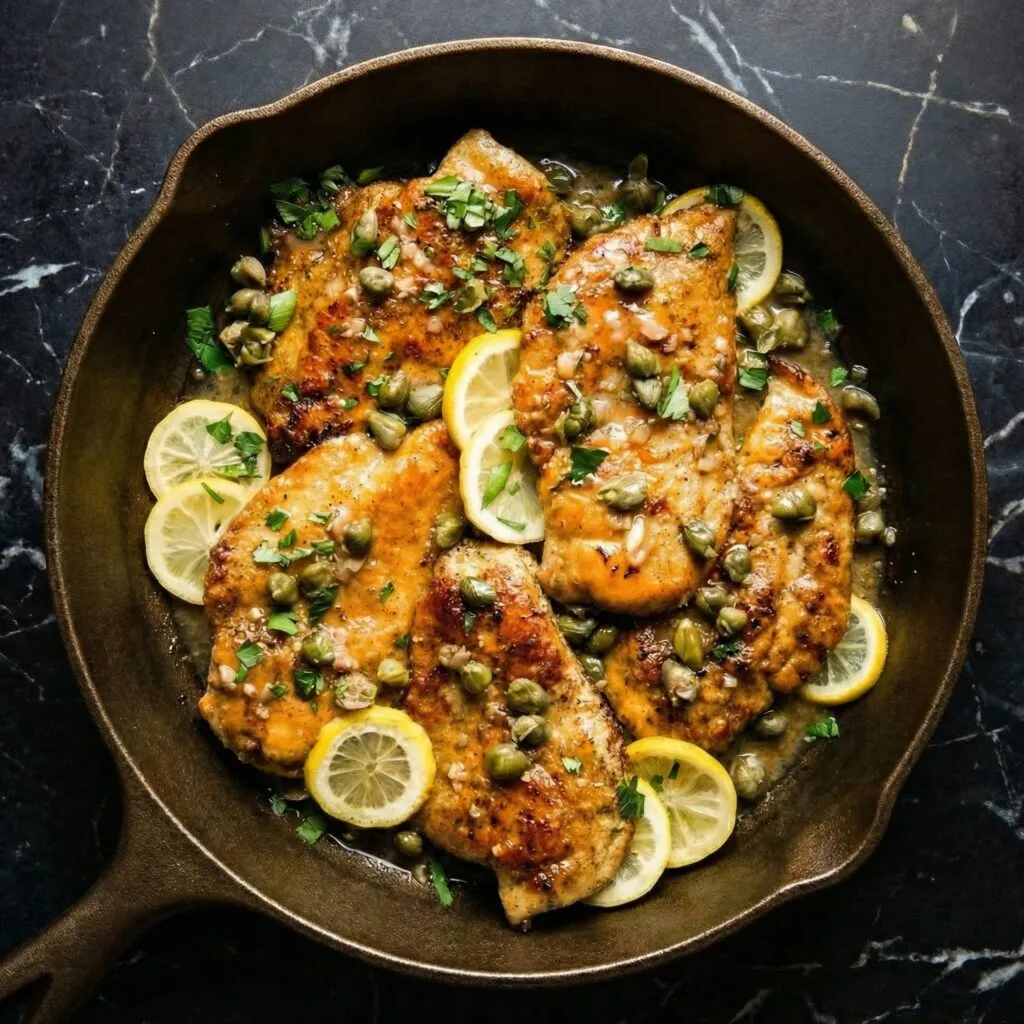
If you’re craving something comforting yet elegant, Chicken Piccata is the answer.
This Italian-American classic delivers golden pan-seared chicken cutlets bathed in a silky lemon-butter sauce dotted with briny capers. It’s simple enough for a weeknight dinner, yet impressive enough for guests.
The magic lies in balancing bright citrus with rich butter and savory chicken—creating a dish that tastes far more complex than the effort required.
Let’s walk step by step through how to make perfect Chicken Piccata at home.
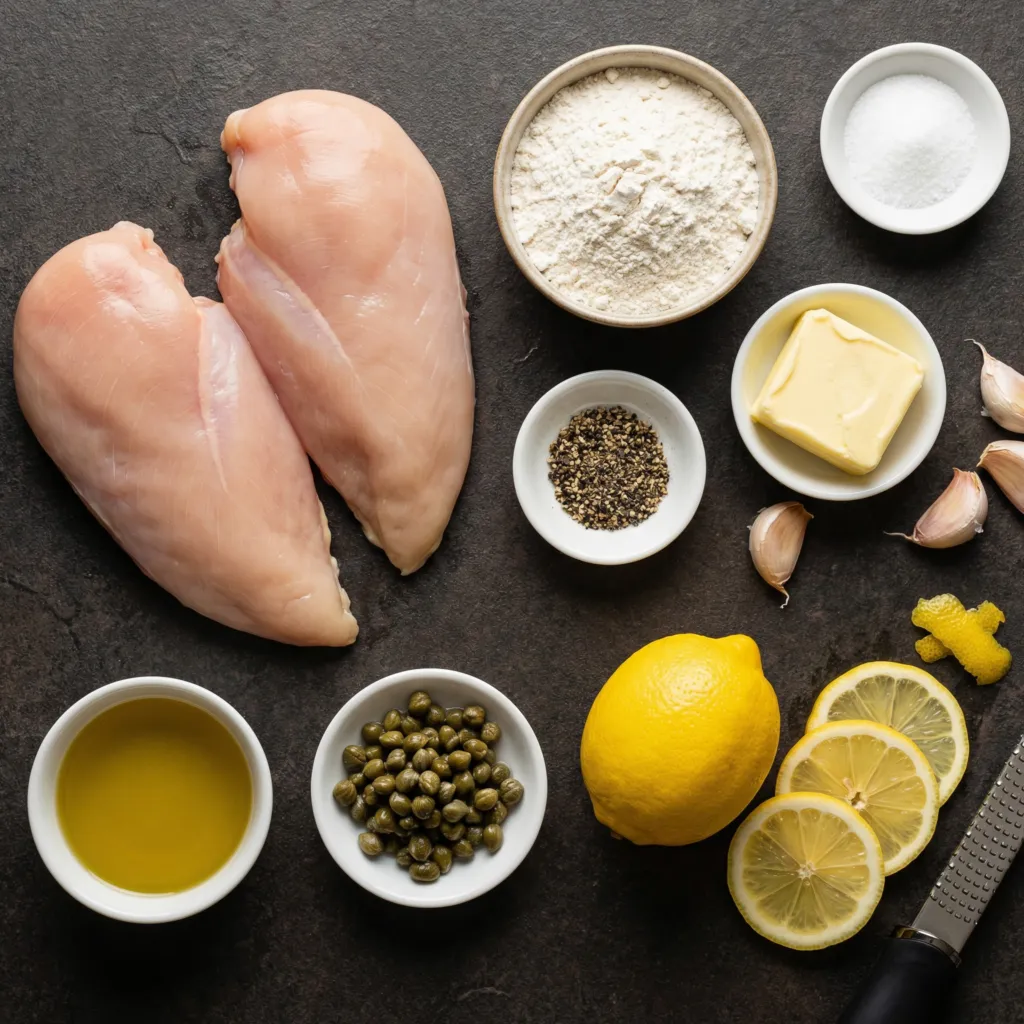
Prepare the Chicken Cutlets
Place the chicken breasts on a cutting board. Carefully slice each one in half horizontally to create four thinner cutlets. If needed, gently pound them between sheets of plastic wrap to an even thickness—about ½ inch thick. Even thickness ensures they cook quickly and evenly.
Pat the chicken dry with paper towels. Season both sides generously with salt and freshly ground black pepper.
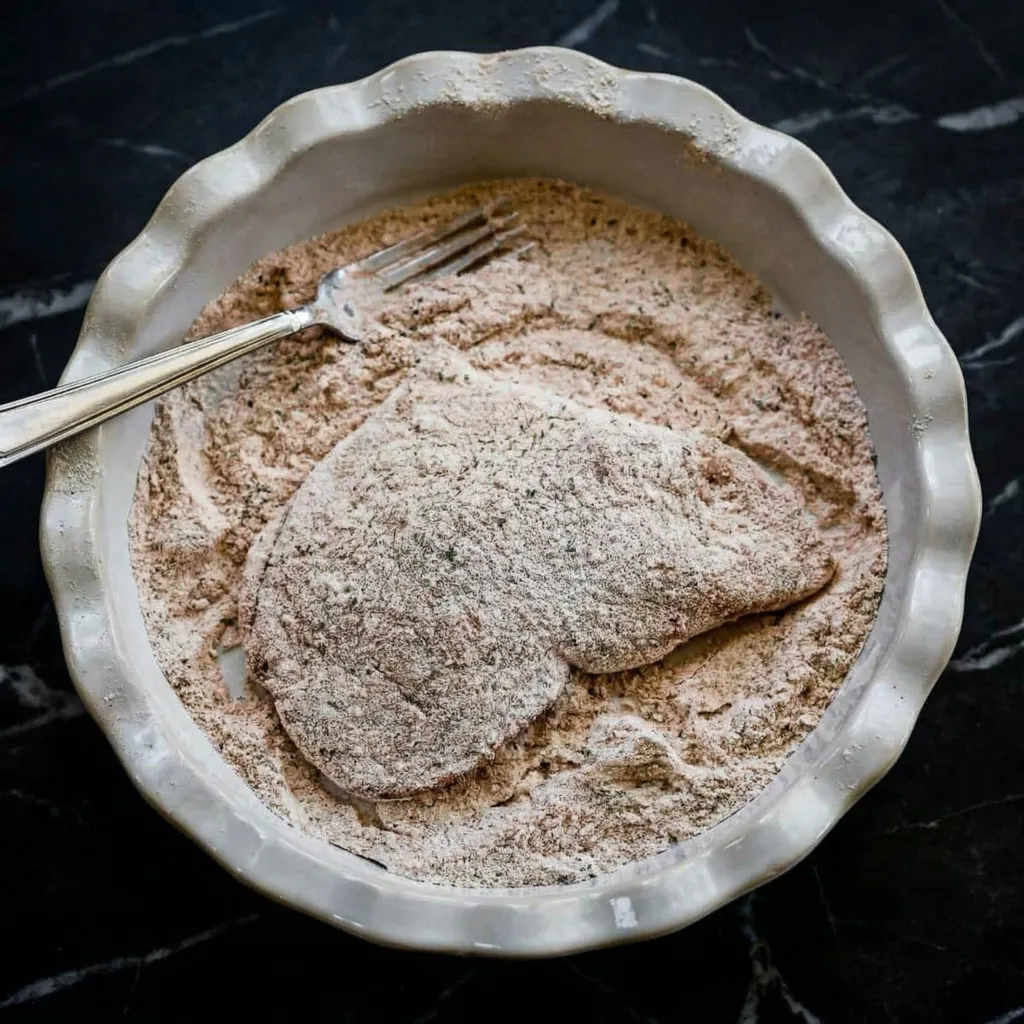
Dredge in Flour
Spread the flour on a shallow plate. Lightly dredge each chicken cutlet in flour, shaking off any excess. The flour creates a delicate crust and helps thicken the sauce later.
Set the coated cutlets aside on a plate while you heat the pan.
Sear the Chicken
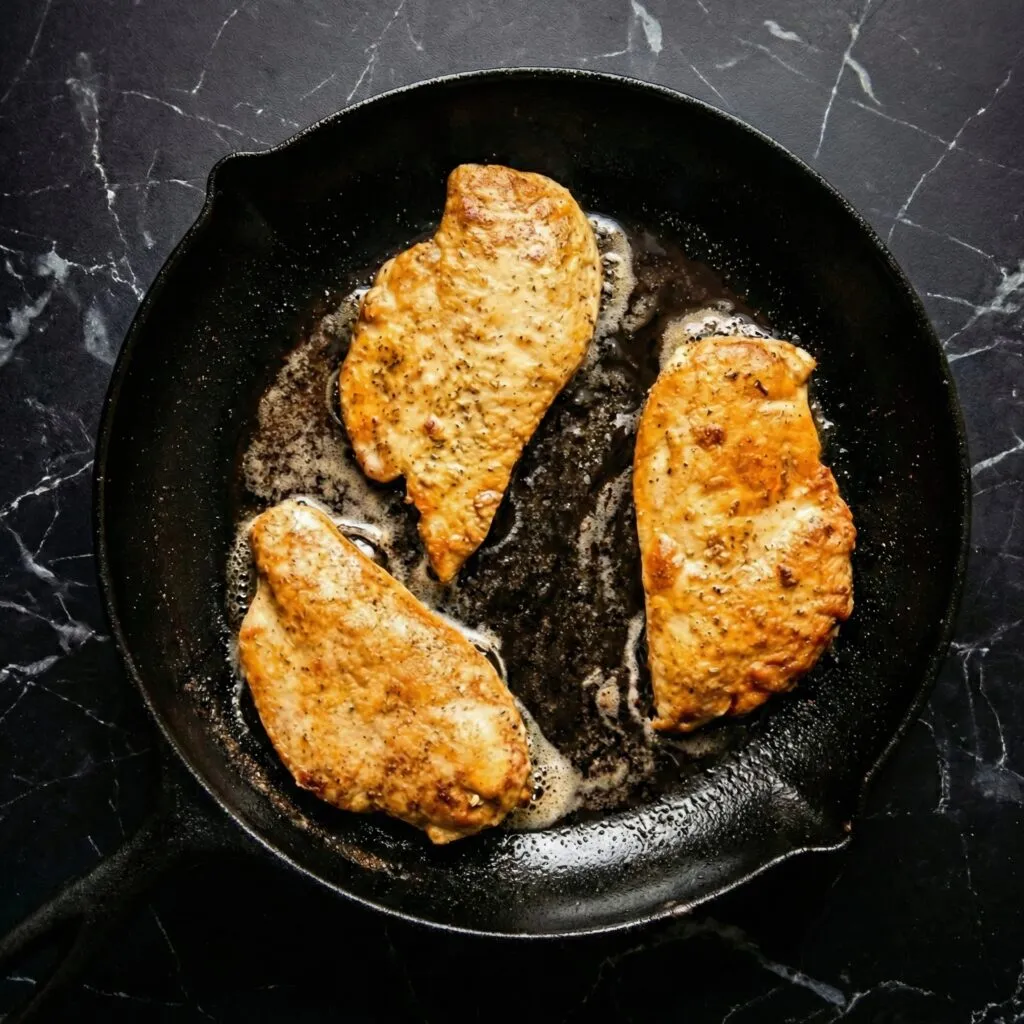
Heat a large skillet over medium-high heat. Add the olive oil and 2 tablespoons of butter. Once the butter is melted and foamy, carefully place the chicken cutlets in the pan in a single layer. Avoid overcrowding; cook in batches if necessary.
Cook for about 3–4 minutes on the first side without moving them. You’re looking for a golden-brown crust. Flip and cook for another 2–3 minutes until fully cooked through and no longer pink in the center.
Transfer the cooked chicken to a plate and tent loosely with foil to keep warm.
Build the Lemon-Caper Sauce
With the pan still over medium heat, pour in the chicken broth to deglaze. Use a wooden spoon to scrape up the browned bits from the bottom of the pan—this is pure flavor.
Let the broth simmer for 2–3 minutes, allowing it to reduce slightly. Stir in the freshly squeezed lemon juice and capers. Continue simmering for another 2–3 minutes until the sauce reduces and thickens slightly.
Finish with Butter
Reduce the heat to low. Add the remaining 3 tablespoons of butter, one piece at a time, stirring continuously until melted and incorporated. This technique—called “mounting with butter”—creates a silky, glossy sauce.
Taste and adjust seasoning if needed. If the sauce is too tart, a small pinch of salt can help balance it. If you prefer more brightness, add an extra squeeze of lemon.
Return the Chicken to the Pan
Place the chicken cutlets back into the skillet, spooning the sauce over the top. Let everything simmer together for 2–3 minutes so the chicken absorbs the flavors.
The sauce should lightly coat the chicken without being too thick or too watery.
Garnish and Serve
Sprinkle freshly chopped parsley over the chicken. Garnish with thin lemon slices if desired. Serve immediately while the sauce is glossy and warm.
Serving Suggestions
Chicken Piccata pairs beautifully with angel hair pasta, mashed potatoes, or fluffy rice to soak up the luscious sauce. For a lighter option, serve it alongside sautéed spinach or roasted asparagus. A simple green salad with a light vinaigrette complements the rich, buttery flavors.
If entertaining, consider serving with crusty bread for dipping into the lemony sauce.
Pro Tips for Success
- Use fresh lemon juice for the brightest flavor. Bottled juice won’t give the same fresh zing.
- Keep the heat steady when making the sauce. Too high, and it may reduce too quickly; too low, and it won’t thicken properly.
- Don’t skip scraping up the browned bits after searing. They add incredible depth.
- Thin, evenly pounded chicken cooks faster and stays tender.
Why This Recipe Works
Chicken Piccata is a masterclass in balance. The flour creates a light crust and helps thicken the sauce naturally. The lemon juice cuts through the richness of the butter, while capers bring salty bursts of flavor that keep every bite interesting.
The key is restraint—just enough lemon to brighten, just enough butter to enrich. When done correctly, the sauce clings gently to the chicken without overpowering it.
Make It Your Own
You can add a splash of dry white wine before the broth for extra depth. Some cooks like to incorporate a bit of cream for a richer sauce, though traditional versions keep it light and lemon-forward. You can even substitute thin veal cutlets for a classic variation.
Chicken Piccata proves that a handful of simple ingredients can create something extraordinary. With crisp golden chicken and a vibrant lemon-caper sauce, this dish brings restaurant-quality flavor straight to your kitchen. Once you make it from scratch, it’s bound to become a regular in your dinner rotation.