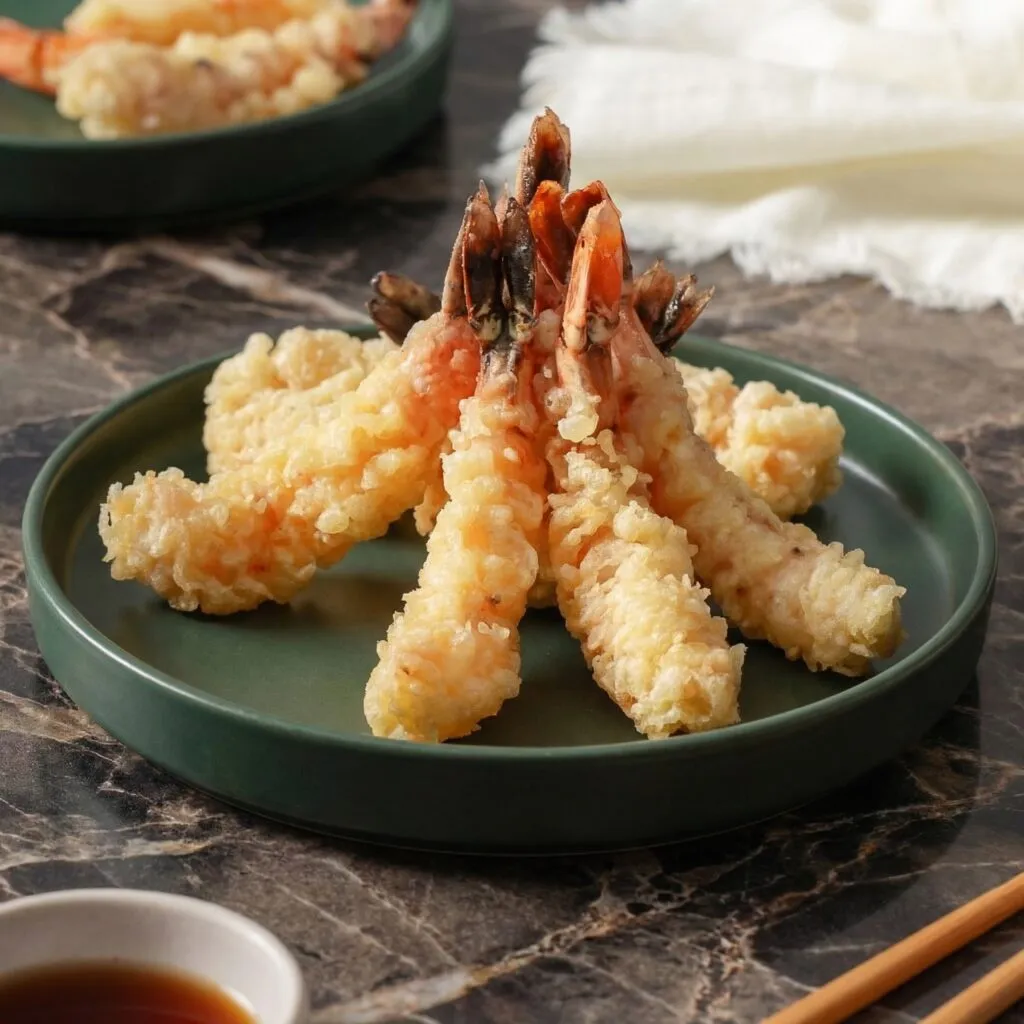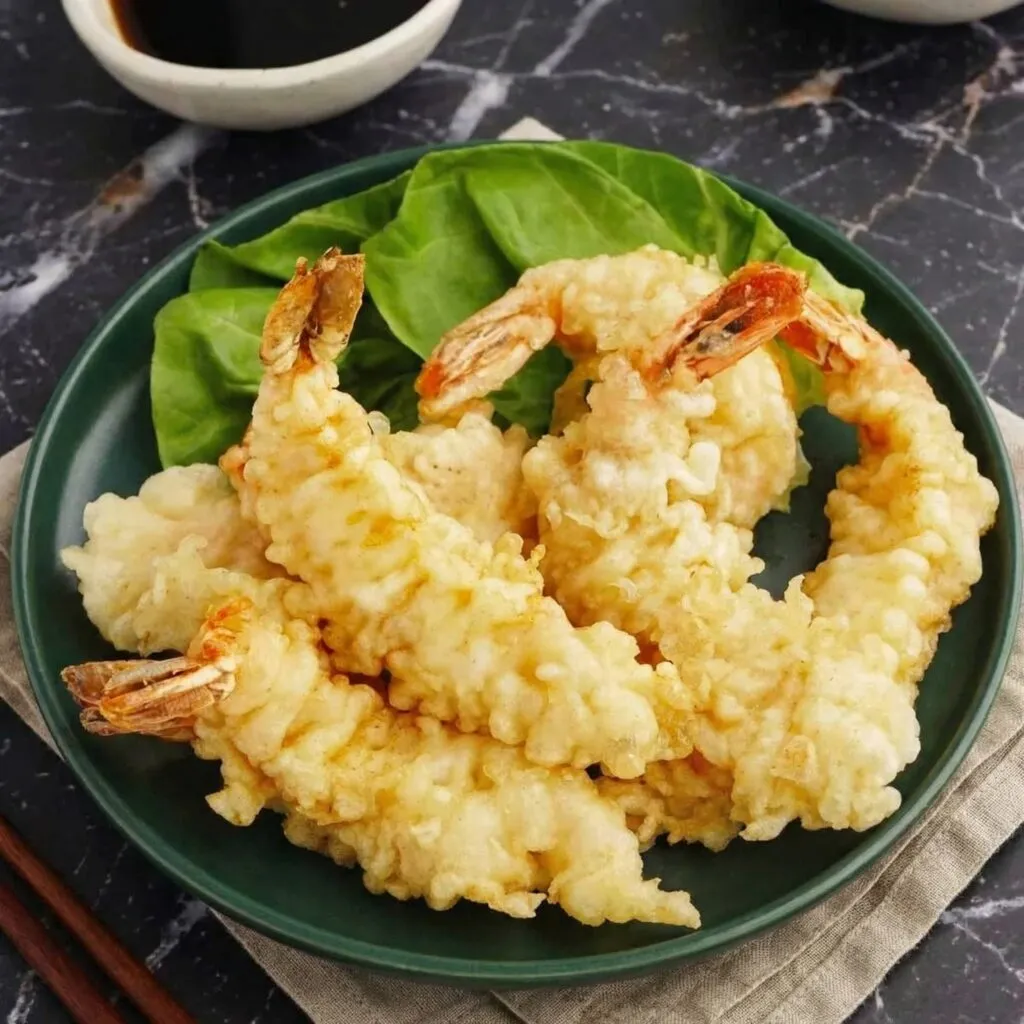
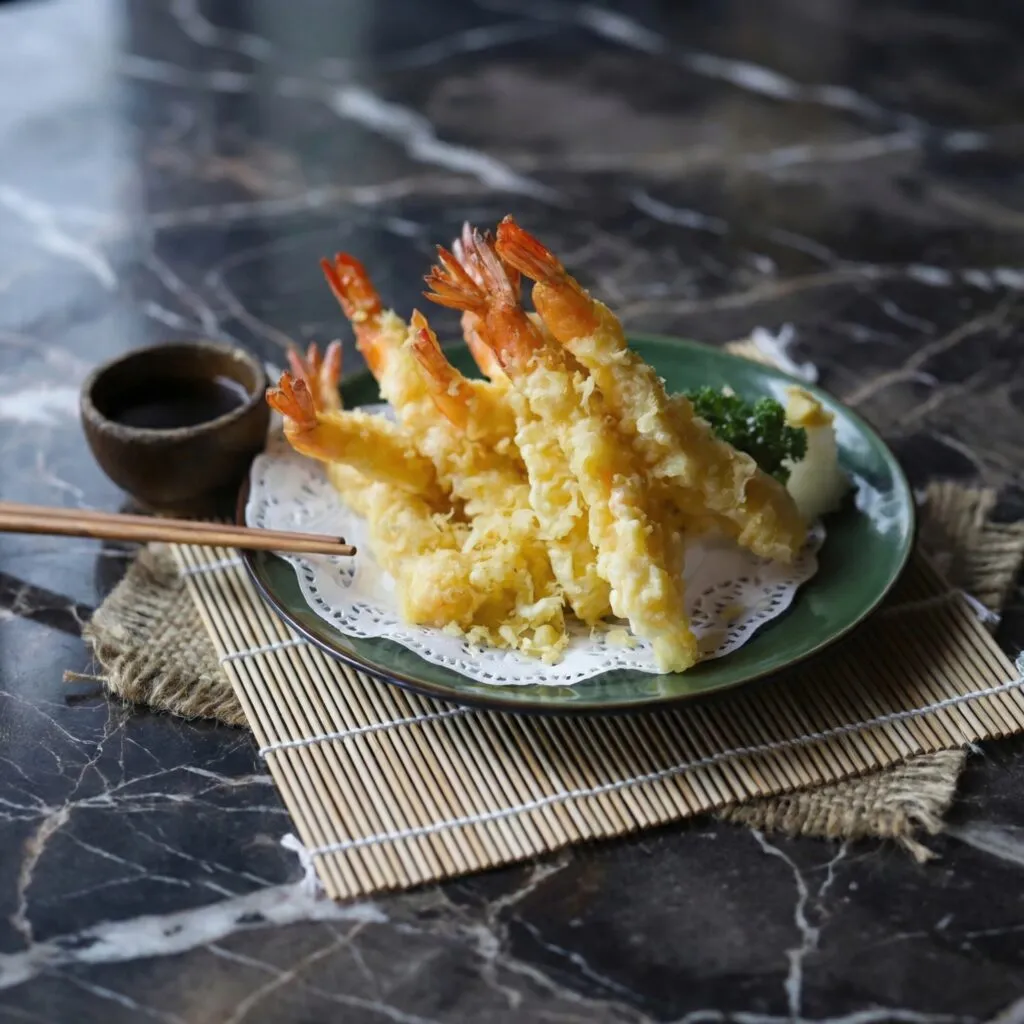
Tempura is frying at its most elegant. Where other fried foods rely on thick, heavy coatings, tempura is all about lightness—a whisper-thin batter that turns into a lacy, shatteringly crisp shell, letting the ingredient inside shine. Shrimp with a sweet, snappy bite. Sweet potato that’s creamy and caramelized at the edges. Shishito peppers that blister and pop.
The secret is in the technique: ice-cold water, minimal mixing, and the right temperature. It’s easier than you think, and once you’ve made it at home, you’ll never look at the freezer section the same way again.
Prep the Ingredients
Shrimp: Make shallow cuts along the belly side to prevent curling. Gently press to straighten.
Vegetables: Slice into thin, even pieces (¼-inch thick for root vegetables). Pat everything completely dry with paper towels. Moisture is the enemy of crispy tempura.
Make the Dipping Sauce
In a small saucepan, combine dashi, soy sauce, and mirin. Bring to a simmer, then remove from heat.
Serve in small bowls with grated daikon and ginger on the side for stirring in.
Heat the Oil
Fill a heavy-bottomed pot or Dutch oven with 2-3 inches of oil. Heat to 340-350°F (170-175°C).
Use a thermometer—temperature control is critical for tempura.
Make the Batter (Just Before Frying)
In a large bowl, whisk together flour and cornstarch.
In a separate bowl, whisk ice-cold water and egg yolk together (add vodka if using).
Pour wet into dry and mix with chopsticks or a fork. Do not overmix. The batter should be lumpy with streaks of flour. Lumps = crispy tempura. Smooth batter = tough tempura.
Keep the batter cold by placing the bowl over another bowl filled with ice.
Fry the Tempura
Working in small batches, dip ingredients into the batter, allowing excess to drip off.
Gently drop into the hot oil. Don’t crowd the pot.
Vegetables: Fry for 1-3 minutes until crispy and lightly golden.
Shrimp: Fry for 1-2 minutes until batter is crispy and shrimp is just cooked through.
Remove with a slotted spoon and drain on a wire rack (not paper towels—paper towels trap steam and soften the crust).
Serve Immediately
Arrange tempura on a platter with a bowl of tentsuyu sauce for dipping.
Sprinkle with a pinch of flaky salt if desired.
Dip, crunch, and repeat. Tempura waits for no one—serve immediately while it’s at its crispiest peak.
Summary
Prep Time: 20 minutes | Cook Time: 15 minutes | Total Time: 35 minutes
Yield: 4 appetizer servings
Difficulty: Easier than you think
Storage Notes
Leftovers:
Tempura is best eaten immediately—it loses its crispiness within hours. If you have leftovers, store in an airtight container in the fridge for up to 1 day.
Reheating (Bring Back Some Crunch):
Oven or air fryer (best): 400°F for 3-5 minutes. Never microwave—it turns tempura into a sad, soggy mess.
Make Ahead:
Prep all ingredients up to a day ahead. Keep refrigerated. Pat dry before battering. Make batter fresh—it takes 2 minutes.
Pro Tips for Tempura Greatness:
- Ice-cold everything. Cold batter + hot oil = crispy tempura. Use ice water, keep the bowl over ice, and work quickly.
- Don’t overmix. Lumpy batter is good batter. Overmixing develops gluten and makes tempura heavy.
- Pat ingredients dry. Any moisture on the surface creates steam that prevents crispiness.
- Maintain oil temperature. Invest in a thermometer. Oil that’s too cool = greasy; too hot = burnt outside, raw inside.
- Work in small batches. Overcrowding drops the temperature. Fry 4-5 pieces at a time.
- Drain on wire racks. Paper towels trap steam and soften the crust. Wire racks let air circulate.
- Vodka is a pro trick. Alcohol evaporates faster than water, creating even crispier batter.
- Serve immediately. Tempura’s crispiness peaks at 3 minutes out of the oil.
Best Vegetables for Tempura:
- Sweet potato: Creamy, sweet, classic. Slice ¼-inch thick.
- Eggplant: Silky interior. Slice into rounds or fans.
- Shishito peppers: Blister and pop. Fry whole.
- Mushrooms: Shiitake or enoki hold up well.
- Zucchini: Slice into rounds or spears.
- Green beans: Crisp and sweet. Fry in small bundles.
- Kabocha squash: Sweet, dense, beautiful. Slice thin.
- Lotus root: Crunchy, lacy, stunning presentation.
- Bell peppers: Sweet and colorful. Slice into strips.
- Broccoli or cauliflower: Florets fry beautifully.