Baking

Potato Pavé (The Fancy Potato That’s Totally Worth It)

Tested & Loved ★ 100% Delicious ★
Potato Pavé (The Fancy Potato That’s Totally Worth It)

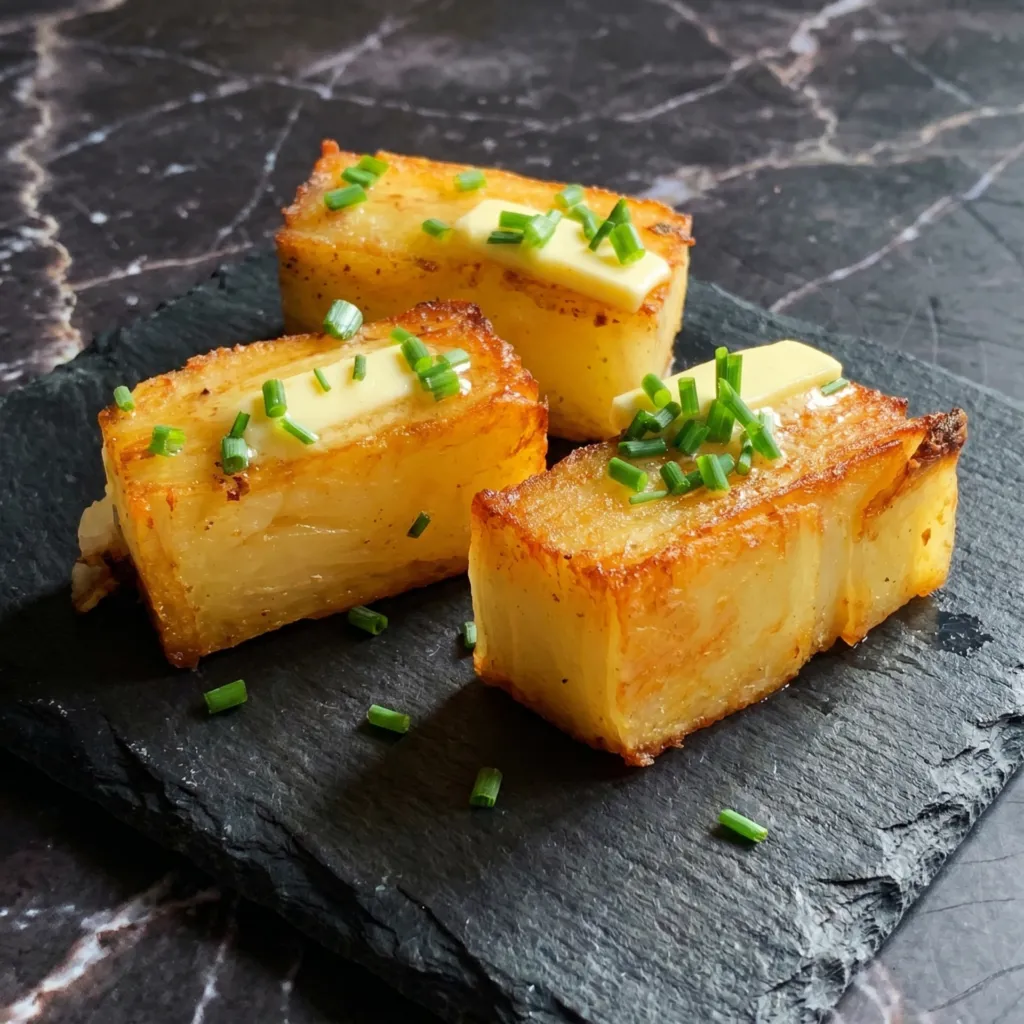
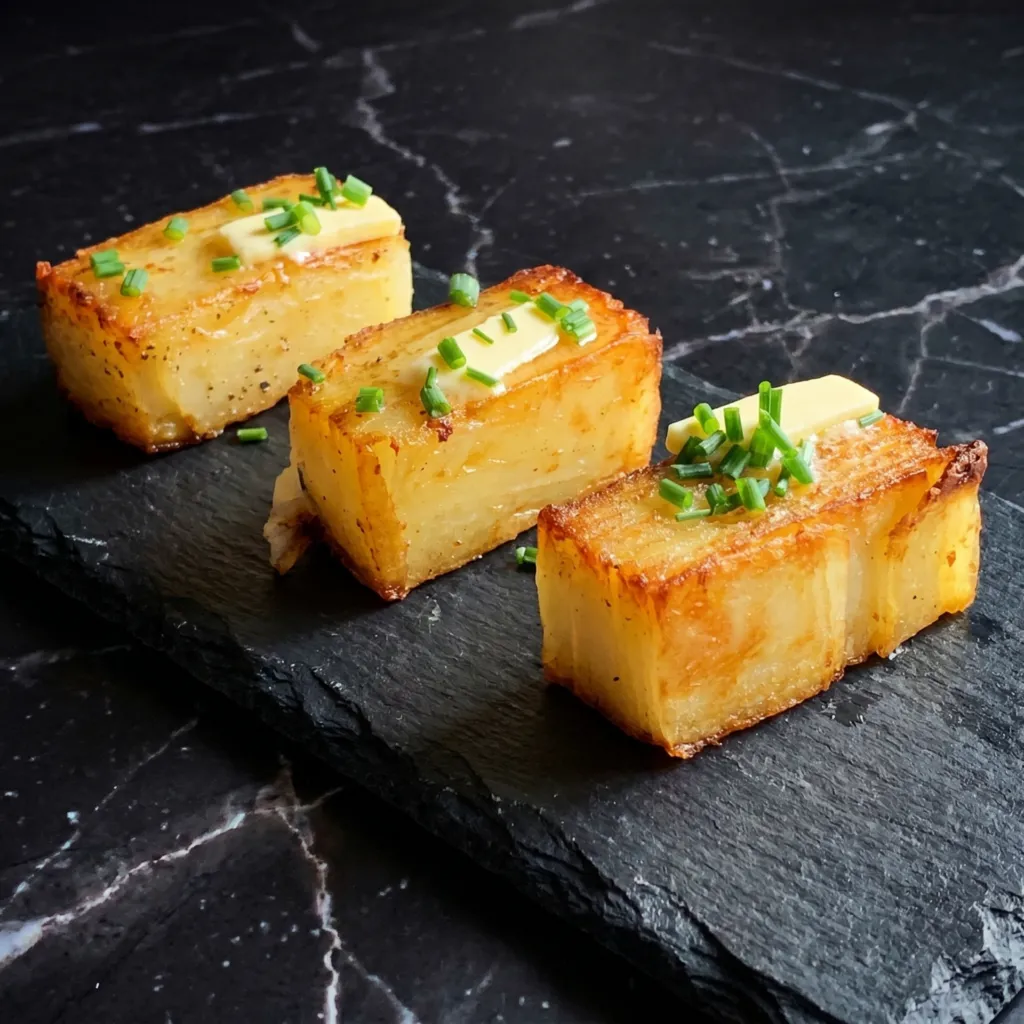
Slice the potatoes on a mandoline at 1/16 inch, thin enough that you can almost see the blade through them, because that's what lets dozens of layers fuse into one solid block. You build it in a parchment-lined loaf pan, drizzling garlic-thyme cream every few layers and pressing down firmly as you go. The bake is slow and the chill is overnight, both under weight, so plan ahead. What you get at the end are dense potato bricks that fry up crisp on the outside and stay creamy in the middle.

By Nora Calloway

A little backstory

Pavé is French for "paving stone," and that's exactly the shape you're after once the block is sliced. The layered-and-pressed method is a restaurant standard for turning humble potatoes into something composed enough for a tasting menu, and it's often associated with Thomas Keller's kitchens.

This potato sounds French. It is. But don’t run.

Potato pavé is thinly sliced potatoes layered with cream and herbs, pressed overnight, then cut into bricks and fried until crispy. Crunchy outside. Velvety inside. Yes, it takes time. Yes, it’s worth it.
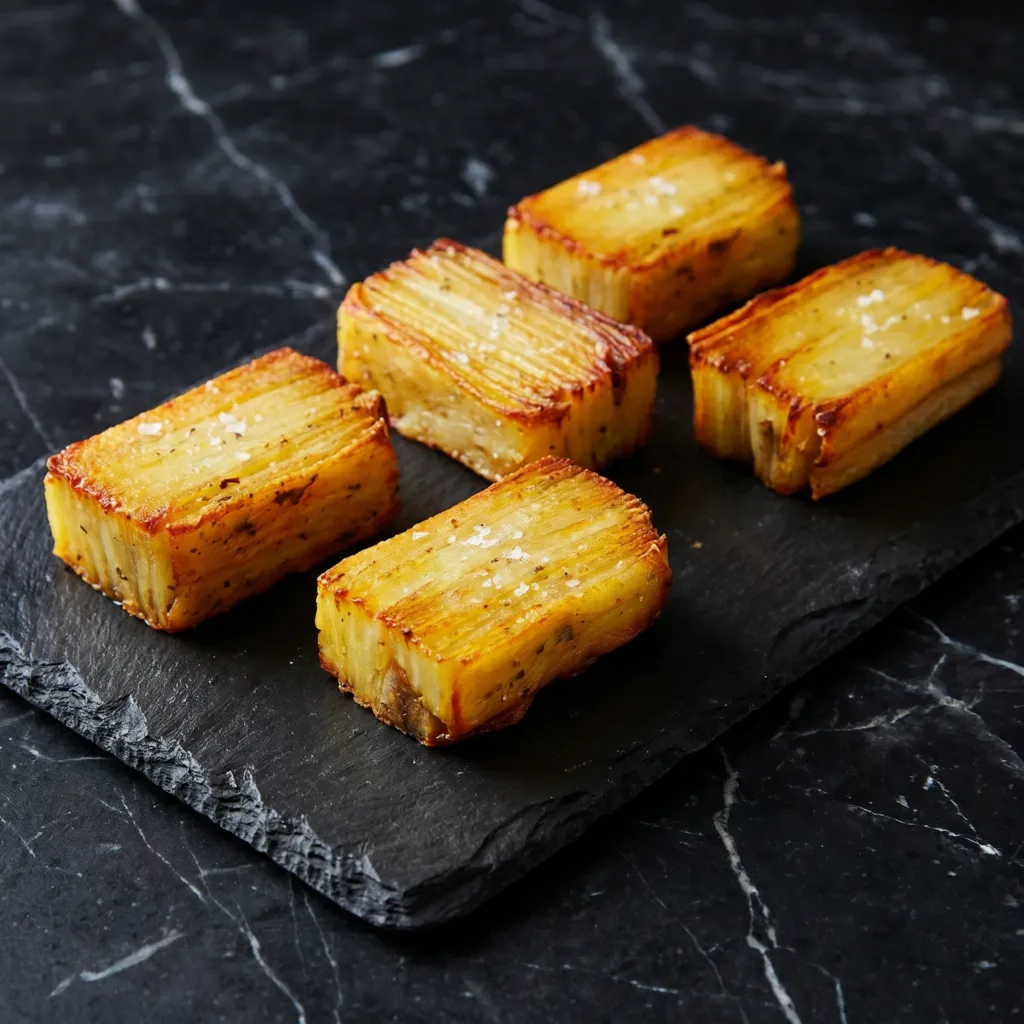
Serves 6-8 as side.

Step-by-Step Instructions

1

Prep

Preheat oven to 350°F (175°C). Line a loaf pan with parchment paper (overhang on sides).

Peel potatoes. Slice paper-thin (use a mandoline, 1/16 inch).

2

Make Cream Mixture

Mix cream, garlic, thyme, salt, and pepper in a bowl.

3

Layer

Layer potatoes in the loaf pan, brushing/drizzling cream mixture every few layers.

Press down firmly after every few layers. Fill to the top.

4

Bake and Press

Cover with parchment. Weigh down with another loaf pan or foil-wrapped bricks.

Bake for 1.5-2 hours until potatoes are tender and edges are brown.

Cool completely. Refrigerate overnight (still weighted).

5

Slice and Fry

Remove potato block from pan. Slice into 1-inch thick rectangles.

Heat ¼ inch oil in a skillet over medium-high heat.

Fry each brick until golden and crispy on both sides (2-3 minutes per side).

6

Serve

Drain on paper towels. Sprinkle with salt. Serve immediately.

Summary

Prep Time: 30 minutes | Bake Time: 2 hours | Chill Time: Overnight | Fry Time: 10 minutes | Total Time: ~13 hours (mostly hands-off)

Yield: 6-8 servings

Difficulty: Medium (needs planning)

Storage Notes

Make Ahead Hero:

Baked and pressed potato pavé keeps in the fridge for 4 days before frying. Fry when ready to serve.

Freeze Sliced:

Freeze unbaked slices on a tray. Bake from frozen at 350°F for 25 minutes.

Reheat Leftover Fried Pavé:

Oven at 375°F for 5-7 minutes (not microwave—soggy).

Pro Tip:

  • Don’t skip the overnight press. That weight is what gives pavé its dense, layered structure.
Swaps & Substitutions

Questions & Answers

Do I really need to chill it overnight?

Yes. The block is too soft to slice into clean rectangles straight from the oven. An overnight chill under weight compresses the layers and firms everything up so it holds together when you cut and fry it.

Why did my layers fall apart when I sliced it?

Usually the potatoes were sliced too thick or the layers weren't pressed firmly enough, so there's not enough starch contact to glue them. Going thinner on the mandoline and pressing down at every few layers fixes it, as does giving it the full overnight chill under weight.

Can I make the block ahead and fry later?

That's the ideal workflow. Bake and chill the block up to two or three days ahead, keep it weighted and wrapped in the fridge, then slice and fry just before serving so the crust is fresh.

What should I weigh it down with?

A second loaf pan that nests inside, loaded with a couple of cans, or foil-wrapped bricks. You want steady, even pressure across the whole surface, not one heavy point in the middle.

My bricks browned but stayed cold inside. What happened?

Frying out of the fridge over high heat crisps the outside before the center warms. Let the slices sit at room temperature for 15 to 20 minutes first, and keep the oil at a steady medium-high rather than ripping hot.

More from the Recipe Box

Craving more delicious recipes?

Subscribe to our newsletter and get our favorite weekend recipes delivered to your inbox every Friday morning.